.webp)
The MiPACS Storage Server is a fast, user-friendly, scalable, modular, and affordable Picture Archive and Communication System (PACS). Powered by the industry-leading medical imaging engine, it serves as both the core of a PACS and a centralized repository for radiology and medical DICOM images and objects.
Embracing a philosophy of simplicity and practicality, the MiPACS product line contains capabilities and features that surpass many leading PACS servers, all at a fraction of the cost. Its affordable pricing model makes it a great choice for small to medium-sized facilities transitioning to a digital environment.
The MiPACS Storage Server is very easy to deploy and maintain within any IT environment and provides an ideal way of reducing ongoing PACS administration costs. It is simple to learn, install, configure, use, and service.

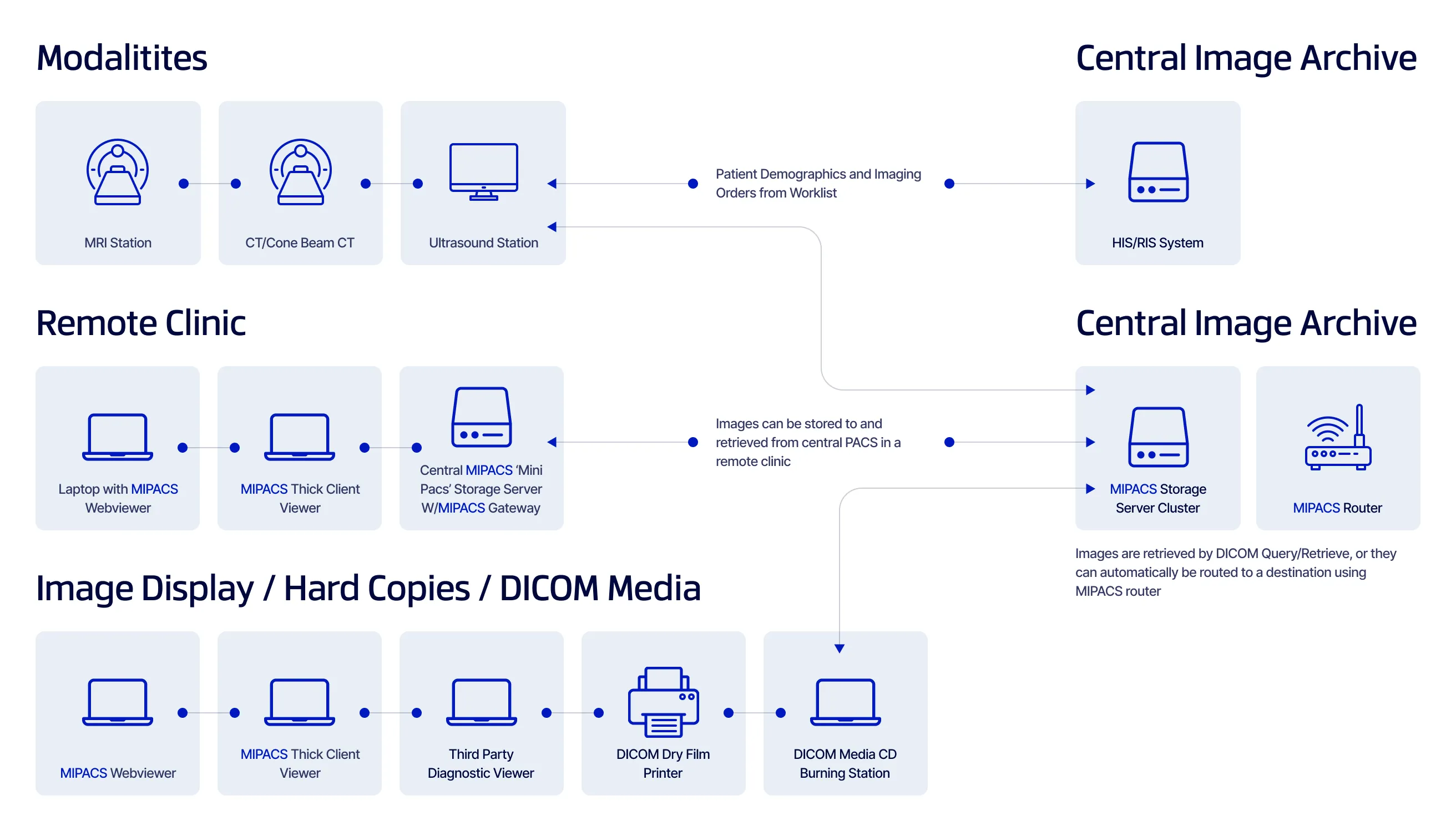
A Modular, Enterprise-Ready PACS Platform
The MiPACS Storage Server is designed around simplicity and scalability. As a standalone system, it delivers complete PACS functionality for storing and managing medical images. As your needs grow, its modular architecture allows you to extend capabilities without replacing your core system. This approach gives healthcare organizations greater control over costs while ensuring long-term flexibility as imaging volumes, modalities, and integration needs evolve.
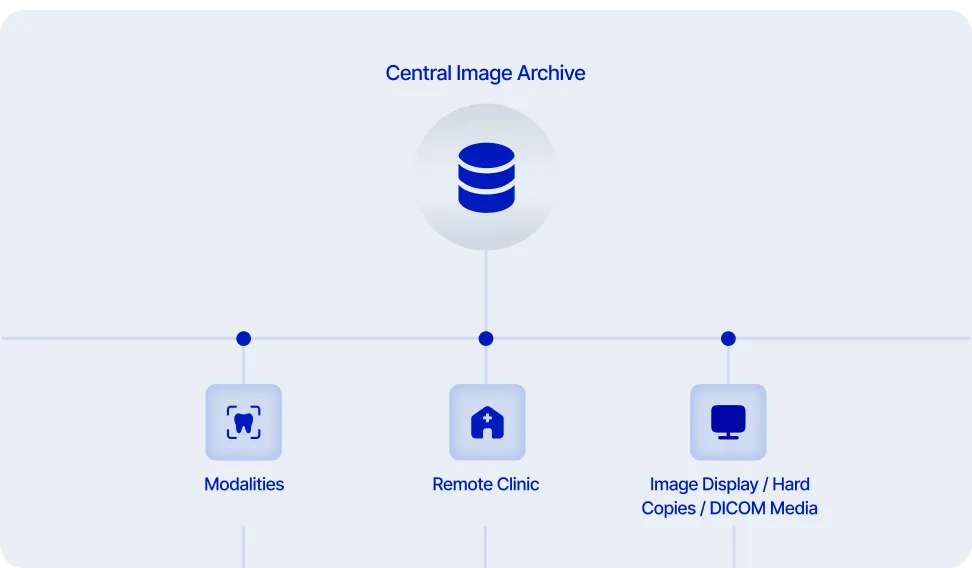
MiPACS Storage Server Add-on Modules
The modular design of the MiPACS Storage Server allows you to purchase only the functionality you need today, with the option to expand in the future.
Available add-on modules include:
MiPACS DICOM Router+

The MiPACS DICOM Router+ enables intelligent routing, forwarding, and management of DICOM images between systems. It helps streamline image distribution across PACS, modalities, and external systems while supporting complex routing rules and enterprise workflows.
MiPACS HL7 Add-on

The MiPACS HL7 Add-on allows the Storage Server to receive patient demographic updates and order information through an HL7 interface. It supports ADT messages for patient updates (including A31 and A40), check-in messages, and ORM messages used to populate modality worklists. When combined with the MiPACS Modality Worklist Add-on, this module enables accurate, automated delivery of patient and order data to imaging modalities. The HL7 Add-on is designed for inbound communication only and does not provide outbound HL7 messaging.
MiPACS Modality Worklist Add-On

The MiPACS Modality Worklist Add-On provides a DICOM Modality Worklist Service Class Provider (SCP) to deliver patient and order information directly to imaging modalities. This enables Electronic Health Record (EHR) and Radiology Information System (RIS) platforms to supply worklist data without implementing DICOM services themselves. By populating a Microsoft SQL database with order and demographic information, organizations can ensure consistent, accurate data is presented at the modality, helping reduce manual entry errors and improving workflow efficiency.
Integrated Access with the MiPACS HTML5 Web Viewer
The MiPACS Storage Server integrates seamlessly with the MiPACS HTML5 Web Viewer, providing secure, browser-based access to medical images without requiring client-side installation. The Web Viewer supports all major HTML5-compliant browsers and devices, enabling authorized users to view images from virtually any location.
The MiPACS HTML5 Web Viewer can also be deployed as a standalone solution and integrated with third-party DICOM PACS, offering additional flexibility for hybrid or multi-vendor environments.
.webp)
.webp)
See the MiPACS Imaging Platform in Action
The MiPACS Storage Server is part of a comprehensive imaging platform built to support secure storage, efficient workflows, and scalable growth. Book a personalized demo to see how MiPACS can modernize your PACS infrastructure while reducing complexity and long-term costs.